

Our Blogs
Our Blogs
What is kneader mixer?
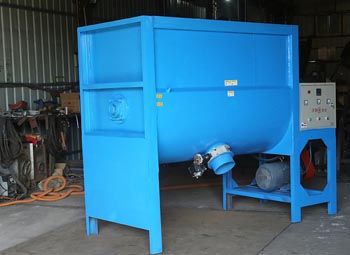
Kneader mixer is also known as Z blade kneader reactor ,or Double Sigma blade Mixer, it is a device used for mixing and kneading substances with high viscosity. it belongs to the family of double arm kneader mixers. The kneader mixer is a multi-functional equipment combining kneading, mixing,heating, vulcanizing and polymerizing. This Z Blade mixer extruders are widely used in different industries , it is specially suitable to process High Viscosity and Elastoplastic materials,such as such as chewing gum, dough, toffee, Plasticine, rubber, silicone, adhesive or resin etc. The knead mixer is a horizontal mixing machine with two Sigma, or Z-type blades,which rotate together in a horizontal trough. Its two blades are driven by separate gears at different speeds, or one running 1.5 times faster than the other. The reactor has one powerful motor and a speed reducer to drive the two blades. By different speed ,it would generate a strong shearing force, which make the mixture quickly be sheared and evenly mixed. During the mixing cycle, the extrusion screw continuously push the materials within reach of the mixing blades, shortening cycle time significantly compared to conventional double-arm mixers. So why do we need blade mixer kneader ? It has many advantage as follows: * Excellent mixand knead performance during wet, pasty and viscous phases *Large working volume reactors efficiently handling large product volumes *Large heat-exchange surface areas yielding highest possible surface-to-volume ratio *Robust design for high viscosity processing we are able to solve any issues of kneading, mixing & dispersing that could be encountered in the food and chemical industries.
What is a vulcanizing press?
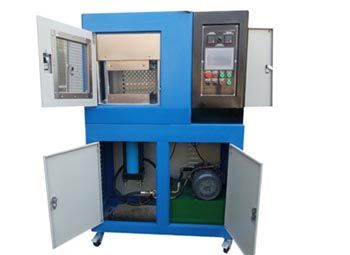
Curing, also known as vulcanization, is done by vulcanizer press machinery with heated sulfur, accelerator, and activator at 140–160°C. Curing causes the long polymer chains of rubber to become cross-linked. The vulcanized rubber prevents the chains from moving independently; it allows the material to stretch under stress and pressure. Then it returns to its original feature when the stress is released. After vulcanization, the treated crude or synthetic rubber or similar plastic material would become more elastic, resilient, tensile, dense, hard, and weather resistant. The curing vulcanizer machine consists of two heavy metal platters (which can be customized). It is used for vulcanizing various kinds of rubber silicon and plastic mold products, And it can make a tire, O-rings, rubber floor tiles, slippers, and other rubber products. It can also be used for thermosetting plastic, foam, resin, bakelite, sheet metal, building materials, and other model product pressing. So why do these rubber materials need to be cured? Compared to cured rubber material, uncured rubber deforms easily when it is warm and is brittle when cold. As its natural feature, raw rubber is not flexible, valuable material for many finished products. Uses Of Vulcanization Rubber hoses, shoe bottoms, toys, erasers, shock absorbers, conveyor belts, vibration mounts/dampers, insulating materials, tires, and bowling balls are just a few applications for vulcanized materials. Vulcanization enhances the longevity, usefulness, and strength of most rubber goods. Unlike thermoplastic processes (the melt-freeze process that characterizes the behavior of most current polymers), vulcanization, like other thermosetting polymer cures, is often irreversible. There are five types of curing techniques in use: •Sulfur systems •Peroxides •Metallic oxides •Acetoxy silane •Urethane crosslinkers Vulcanization With Sulfur Sulfur is used in the most prevalent vulcanizing techniques. Sulfur is a sluggish vulcanizing agent that does not vulcanize synthetic polyolefins on their own. Accelerated vulcanization is accomplished by combining several substances that alter the kinetics of crosslinking; this mixture is sometimes referred to as a cure package. Polyisoprene (natural rubber) and styrene-butadiene rubber (SBR), utilized in most street-vehicle tires, are the principal polymers subjected to Sulphur vulcanization. The cure package is customized for the substrate and application. The reactive sites (cure sites) are made up of allylic hydrogen atoms. These C-H bonds are near carbon-carbon double bonds. Some of these C-H bonds are replaced during vulcanization by chains of sulfur atoms that connect to a cure site in another polymer chain. These bridges comprise one to multiple atoms. The quantity of sulfur atoms in the crosslink has a significant impact on the physical qualities of the finished rubber item. Short crosslinks improve the heat resistance of the rubber. Rubber with a more substantial number of sulfur atoms has better dynamic qualities but weaker heat resistance. Dynamic characteristics are critical for flexing motions of the rubber component, such as the movement of a running tire's sidewall. Without adequate flexing qualities, these motions cause fractures and eventually cause the rubber object to collapse. Vulcanization Of Polychloroprene Metal oxides (particularly MgO and ZnO, sometimes Pb3O4) are used for vulcanizing neoprene or polychloroprene rubber (CR rubber) rather than sulfur compounds, which are currently employed with many natural and synthetic rubbers. Furthermore, because of several processing conditions (notably scorch, which is the early cross-linking of rubbers caused by heat), the choice of accelerator is regulated by different principles than other diene rubbers. Most commonly used accelerators are troublesome when CR rubbers are cured. The most significant accelerator has been identified as ethylene thiourea (ETU), which, although an effective and proven accelerator for polychloroprene, has been designated as reprotoxic. The European rubber industry has launched the Safe Rubber research initiative to create a safer alternative to the usage of ETU.
Why do rubber need vulcanization or curing
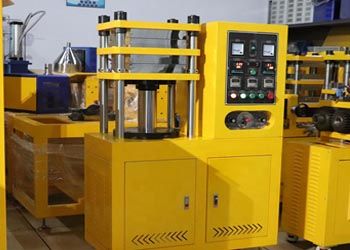
Rubber raw cann't be directly used ,it need to be processed with heat and sulfur during production , so that to improve its physical properties. This process ,we call it as curing, it is also known as vulcanization. By ways of vulcanization, it makes the rubber material stronger and more elastic. Before we talk about curing or vulcanzation ,we need to know what is vulcanization? vulcanization ,it is one curing process in which the rubber's elastomers harden in response to heat and sulfur under a temperature of about 300 to 400 degrees . Through curing or vulcanization , it caused in polymer chains crosslinked . With sulphur, accelerator and activator at 140–160°C, it would form a stable polymer ,it become more strong and stable. It would prevent the chains from moving independently, thus allow the raw rubber material to stretch under stress. By vulcanization, the physical properties of natural or synthetic rubber are improved. These finished rubber products have higher tensile strength and resistance to swelling and abrasion. Through vulcanization,the rubber material become being elasticity, resilience, tensile strength, viscosity, hardness and weather resistance. From tires and footwear to keypads and gaskets, countless products are made of vulcanized rubber. Since valcanization is so important to rubber ,how does it work? Firstly, the rubber is put around sulfur and additives. sulfur would be very imprant to facilitate vulcanization, other additives are mixed accordingly. then the rubber is molded into the desired shape and size. Vulcanized rubber can’t be easily molded. It becuase the vulcanized rubber is more strong and elastic ,thus it is difficult to mold. After being molded, the rubber is heated in an oven-like chamber. While sulfur alone can vulcanize rubber, the addition of heat helps to speed up the process. The rubber is heated to At the end,these vulcanized rubber would be taken out from the heating chamber and allowed to cool.
How rubber is process ?
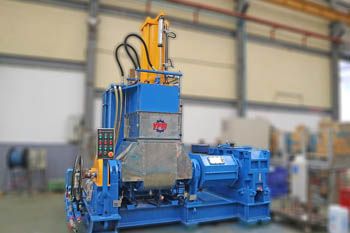
Rubber is an incredibly common and versatile material; it is widely used for making many items in our daily life, such as elastic bands, footwear, swimming caps, and hoses. And some rubber would be produced to make vehicle tires. Usually, rubber processing consists of four basic steps as follows: How Rubber Is Processed In A Nut Shell 1. Mastication, when the polymer is sheared, and the molecules are broken down to give more effortless flow. The process can be done either in large enclosed mixing machines or on rubber mills. 2. Mixing, After Mastication, the material should be mixer or roll mixing mill when additives are incorporated 3. Extrusion: Extruders produce long continuous products such as tubing, tire treads, and wire coverings. They are also used to produce various profiles that can later be cut to length. 4. Curing Or Vulcanization, when the polymer molecules become interlinked and the shape is fixed, it needs to be heated by steam or electricity to temperatures and get formed to the desired shape and thickness that we need. Both natural and synthetic rubber can be changed into compounds which are suitable to face the most challenging performance and environmental criteria. Usually, basic rubber is nearly not useful to the manufacturer, it must be formulated and so that it become our desired properties in finished products. To process the raw rubber material well, we need wide range of high-quality machines, which are designed and developed according to international quality standards. All the rubber machinery is offered in different capacities and specifications are designed to meet your specific needs. For example, the lab dispersion kneading machine can work on 0.5 liter,1litre to 10 litre. While for large production, you can choose our large capacity industrial dispersion kneading machines which you are available in 35 litre,55litre,75litre and 11o litre, even can reach up to 150 liter capacity. All the large and heavy machines in the industry provides value, durability and reliability. Even some machines in the industry are equipped with a cooling water system.
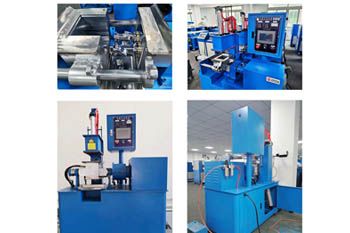
How Rubber & Tire Machinery work?
In the tire and rubber industry, labor costs your business time and money. At Simptek, we provide fast and efficient service to keep your production up and running. As a leader in machinery rigging and moving, we offer turnkey solutions for your equipment — from assembly line removal and installation to single-part replacements and repairs. To meet the needs for greater automation, labor savings, and productivity,Simptek supply a variety of tire machinery, ranging from passenger car tires to the earthmovers. These machinery are known for high productivity and low energy consumption and demonstrate excellent mixing performance. So how do these tiry machinery work? Bead Winding Beads are bands of high tensile-strength steel wire encased in a rubber compound. After the bead wire is coated with special alloys of bronze or brass and rubber, it’s wrapped around a fixture. Beads are inflexible and inelastic, it would provide the mechanical strength to fit the tire to the wheel. Calendaring Calendering is a process in tire manufacturing where steel or fabric is coated with rubber. It works by pulling steel or fabric between two large vertical hard rollers . When the mateiral go through the rollers, due to high temerature and high pressure ,it forces the rubber to permeate and adhere to the steel or fabric. Extruder Extruder machine are used to build tires very popular. Rubber is pressed into a extrusion equipment,it wolud heat the rubber and forces it through a die to produce the desired shape. Roll mixing mill The internal mixer is also called as two roller mixning mill ,it is used to mix oil, rubber,and chemicals into all the rubber compounds ,these coupound material would be used in manufacturing tires. After mixing under high pressure, the rubber is formed into thick sheets which can be further processed in calendare machine and extrusion equipment. Curing vulcanizer Curing is also know as rubber vulcanizer ,it is one process that forms the tire into the desired shape under heat and pressure. The vulcanizer press machine is equipped with a high performance hydraulic system with automatic pressure compensation function. This vulcanization equipmment feature with electric heating and PID temperature ,which can control fast heat and precisely control the temperature
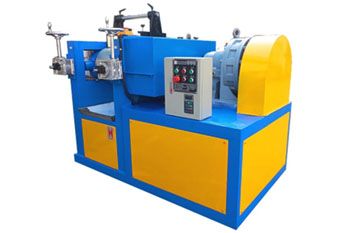
Why do you need silicone mixing mill?
Raw silicone must be fed through a mixing mill to mix in any extra additives or colouring. Thus, it is very important that the quality of mixing during the milling stage of silicone rubber production is constantly monitored. This silicone mixing mill include the rolls, reducer,bearings,motor ,Driving device, Lubricator and cooler,it is applied to mix, knead and plasticize rubber and plastic, and draw them in sheets or strips. Our rubber mixing mill provides both rubber and silicone mixes for compression mould and extrusion machines. We have both internal mill mixing and open mill mixing in use. This open mixing mill is suitable for plastic industry mixing and processing, the material for most polymer , such as rubber ,plastic, silicone ,PVC, color master batch. The two roller mixing mill machine adopts special heated mold, roll surface temperature uniformity, it wouldn't take off a layer, sample thickness can be mixed ,so that the raw material and compound mix and acheive the required color and quality. The two roll silicone open mixing mill is specially developed for silicone material, its roller is made of chilled cast iron with vanadium and titanium alloys and the surface are chrome plating and mirror finishing treatment, it is hard and anti-wear, thus there won’t have the trouble of silicone stickness on the rolls. Our silicone mixing mill is equipped with an overload protection device ,which prevent the major components from being damaged due to overloading .It feature with an emergency device .When an emergent accident happens ,just draw the safety pull-rod ,and the machine will stop immediately .It’s safe and reliable .