

Our Blogs
Our Blogs
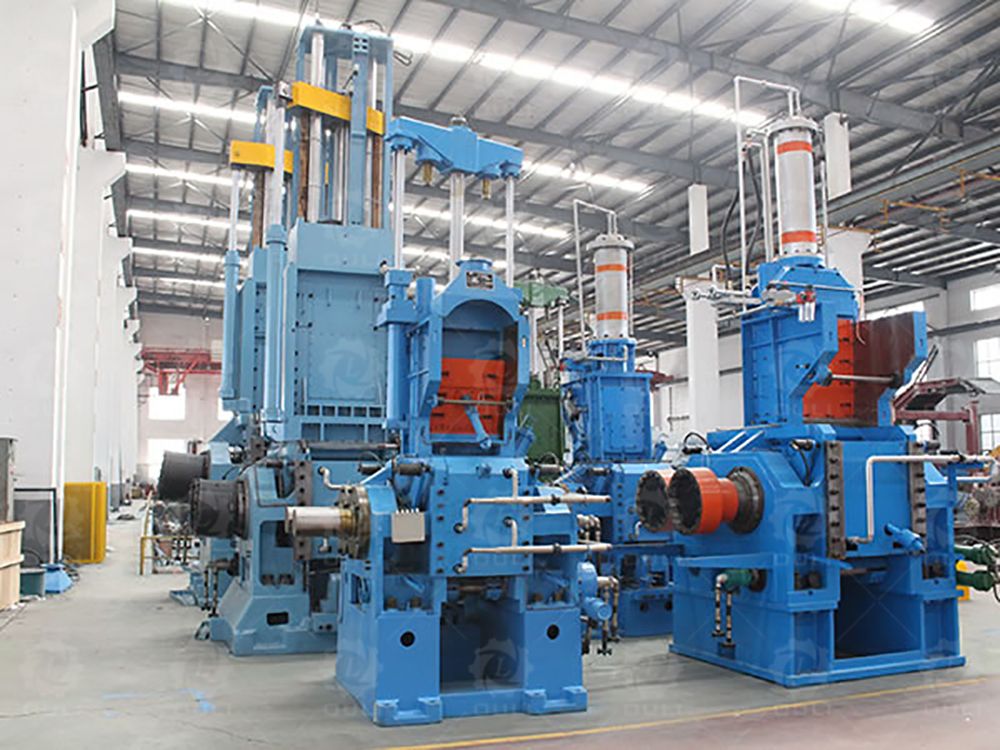
All About Lab Vulcanizer Machine
Lab Rubber vulcanizing machine which is also known as hydraulic press machinery or rubber vulcanizer. Based on the needs and requirements, there are categorized into three main kinds of hydraulic press machines, 1. Column type 2. Frame plate type 3. Jaw type Components Of Lab Vulcanizing, Machine Talking about the components of a rubber vulcanizing machine, the rubber vulcanizer machine mainly comprises a host, hydraulic station, electric control system. Along with a device of pressure, time, and automatic temperature control system to keep a check over these factors. The main purpose of the vulcanizing press machines is that they are mainly for rubber vulcanization, thermosetting plastics, and insulation products that could be pressed for extraction. Being widely used for R & D in laboratories and the labs of colleges, universities, or institutes. It can be used for rubber (raw and synthetic rubber), plastic, silicone material. As the rubber vulcanizing machine works on a mechanism of strengthening the raw rubber with the help of chemical treatment and making it stronger and harder. Mechanism Of The Machine To work over this machine, we need a corporate of well-skilled workers who are educated and trained well by the expertise and might have certifications to work over such high-quality laboratory hydraulic press machines. It is comprised of two hot plates and the plunger that is made up of a high-quality steel material, which is capable to resist high wear and pressures and is quite durable. These vulcanizing press machines can be used along with model pulling and pushing devices to make it easier to work by reducing work strength based on product requirements. To process, the raw materials are placed into the mold between the electric boards, according to the raw material and the requirement of the product needed, one needs to customize the pressure and temperature accordingly. The hydraulic press machine would form the raw material into the required product. Mostly the vulcanizing press machines are high-pressure Vulcanizers that can give their best performance under a working pressure of 5 kg/cm2 to 12 kg/cm2 for faster production. Features Of The Machine 1. Mostly the lab Rubber Vulcanizing machine is a small plate series vulcanizing machine with a big compact structure and giant mold clamping. 2. Most companies provide it with at least almost a one-year warranty and long-term technical support. 3. They are capable enough to form high-temperature saturated steam for the purpose of decontamination or applications requiring sterilization and purification. 4. The lab Rubber Vulcanizing machine is blessed with exceptional characteristics and strengths such as resilience, viscosity, rigidity, tensile strength, and they are even capable to resist changes in the weather. 5. This lab vulcanizer press is quite efficient when it comes to facilitating quick conversions to easily convert natural rubbers and plastics into various parts and products. 6. These Vulcanizer machines are specifically designed and engineered for the purpose of superior functionality in various applications. 7. Vulcanizer machines come with temperature and pressure control units allowing to control temperature and pressure. 8. They can either be automatic or they can be manual too. 9. The automatic lab vulcanizer press machines are easy to operate as they do not require manual force. 10. Automatic lab vulcanizers also come with a programmable logic controller that would allow the users to make necessary adjustments. 11. Most importantly the systems are easy to operate and optimize cycles that help to achieve the desired process and the product results. Moreover, the best vulcanizing press for a lab is capable enough to provide high tensile strength to the rubber. The rubber that is produced as a result is also resistant to swelling and abrasion due to the outstanding production process. Its compact structure helps in the better performance of the machinery. This machine is also often has installed features like; the automatic press, automatic pressure control, and timer. the lab vulcanizer press machine will offer you outstanding economic benefits, not only by saving the cost of all the hard work and labor but also by enhancing the process of production. Factors to Consider While Buying One One can assure the safety and security of the Lab Vulcanizing Machine if a company is following the international standards of safety and security and have OEM/ODM certifications that prove our worth in the international market. while buying a Lab Vulcanizer machine one must definitely check for safety and along with that one should also notice that whether: •The hydraulic vulcanizing press is designed according to your factory setup layout or not. •Is it efficient at boosting your Production output per batch and also decreasing the idle time or not? •Does it follow the safety features and guidelines for the work-friendly application? •Whether it is generated through electric, steam, gas, or thermal oil means.
Understanding The Rubber Mixing Mill
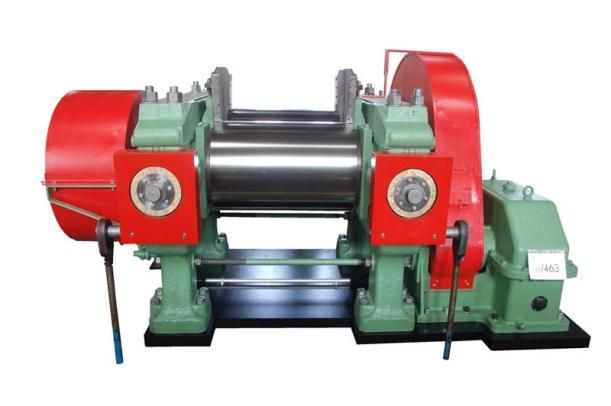
A rubber mixing mill maintains huge importance in the rubber-making industry as it's a fundamental need that keeps the manufacturing of rubber compounds going at an industrial scale. The mixing mill is needed to bring together the materials that are a necessary addition to the mixture when making any kind of rubber compounds, such as fillers, softeners, processing aids, and colorants. The history of the mixing mills goes back to the late 1800s when the mixing mills and their usage can be traced back to the 1820s when different variations of the famous Hancock's Pickle were being used until an official patent was registered in the year 1835. The manufacturers in today's time offer various customization options that affect the working and the final product that is obtained in cases of various types of rubbers. The intentional of artificial synthetic rubber has evolved the involvement of the rubber mixing mills and a large portion of industrial requirements. The global rubber market today thrives on the pioneer contributions from the earlier models of the mixing mills and the technologies that different manufacturers have used to make rubber manufacturing better and flawless. The application of Hancock's Pickle was a groundbreaking advancement in the development of different types of rubbers, which later added to the endeavors of the European rubber industry. It can be said without any issues that the traces of development go back to the year 1835 when the endeavors for a functioning rubber industry had started. There have been many forms of the rubber mixing mill since its introduction, and manufacturers had followed modern principles to make it more effective than it was when it first debuted in the 18th century. Since the beginning, the role of rubber mills was defined as the need kept growing, making room for different improvements to facilitate the global requirement for rubber and products that are made using it. The design principles might have been the same since the start, but there has been some groundbreaking advancement to the functionality and structure of the mixing mills that we see today. Some of the most commonly used versions of different rubber mixing mills include a variable internal clearance mixer, two-roll rubber mills, Banbury mixer, and the intermix. Artificial rubber making has made the contemporary rubber mill a must to have in industrial surroundings; hence manufacturers are working towards making them sustainable and more effective in daily use. The foundation of the classic rubber mill lies in the fundamentals that include the working and structure of the rubber milling apparatus. It's crucial to know the dynamics of the modern face of the rubber mill in order to know it in a better way. More About The Rubber Mixing Mills Structure Of A Rubber Mixing Mill It's crucial to understand that the two rolls present in a rubber mixing machine are parallel and have the ability to move towards each other in an independent capacity. It depends on the nature of the mixture whether the front roll facing the machine operator or the rear roll moves faster depending on the given conditions. When it comes to the nip of the roll, it can be adjusted for the determination of the thickness of the rubber layer. The following measures might change depending on the quantity according to which the machine is operational and providing the required results. It's important to know that the heat is produced during the mixing procedure; hence the rolls can be cooled by the methods of water cooling to reach an optimal processing temperature. Working Of A rubber Mixing Mill It all starts with the untreated rubber block being inserted in the roll nip. The process includes the block getting pulled in the nip and wrapping in the surroundings of the front roll with the thickness of the nip involved. Later in the process, additional materials such as fillers, softeners, processing aids, and colorants are added to get the required results. It is a notable fact that in order to get favorable results, the additives are added one by one to avoid any kind of overlap in the mixing process, which might result in discoloration of the final rubber product. If you want to further read about the functions of rubber mixing mills and how mixing mills work you can read this post to get a clear picture about the working of rubber mixing mill and components in action.
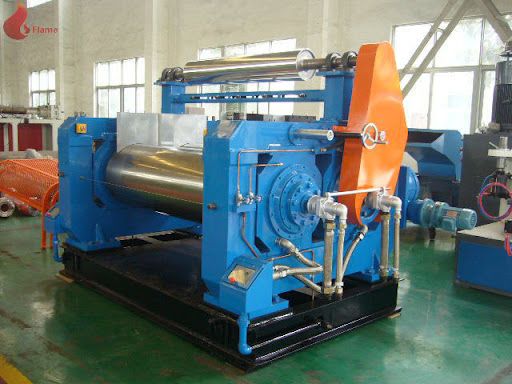
Evolution Of Rubber Mixing Mill
The history of modern rubber mixing can be traced back to the 1800s when the use of different types of rubber mixing machines was a norm. Regions like the USA and Europe were in a phase where new rubber factories were being established, and it was considered as a revolutionary step that would later construct the entire modern rubber industry. The mixing mills and their usage can be traced back to the 1820s when different variations of the famous Hancock’s Pickle were being used until an official patent was registered in the year 1835. The use of Hancock’s Pickle was a groundbreaking advancement at that time, which gave birth to the European contributions to the global rubber industry. It can be said without any issues that the traces of development go back to the year 1835 when the endeavors for a functioning rubber industry had started. The advancements in the rubber milling industry have been happening year after year, but the basic dynamics that are followed today are mainly based on the principles of the classic two roll rubber mill as even today, the mixing is done using the 2-wing tangential rotors. It’s been more than 100 years, but the initial designs that were used in the earliest builds of various mixers are still a global standard when it comes to the main designing elements. The global reliance of the rubber industry on these mixers has made them easily available in the market, and different suppliers and manufacturers even provide the spare parts for each mixer depending on the model and design of each machine. The mills used for mixing rubber might vary in terms of their specification, but the design remains pretty much the same. Here’s a brief guide to the evolution of the rubber mixing mill. Two Roll Rubber Mill The two-roll rubber mills are considered to be the first mills that were used in the manufacturing procedures for natural rubber. These rubber mills are considered the primary standard for the machinery used in the rubber-making process all over the world. The advanced approach that Edwin Chaffee initiated in the 1830s made way for advanced technology, and following the blueprints of the initial design given by Edwin, many inventors offered improvements in the overall design of the two-roll rubber mill. Today, most of the mills that are used in different industries are based on the early concepts that were introduced around the two-roll rubber mills. Large-scale industries such as the tire and shoe-making factories utilize this tool to get the appropriate results to date. The modern face of this internal mixing equipment uses automated means to get the desired outcomes and is less reliant on manpower in order to get them into a functioning state. There are several microprocessors in place that take control of the entire room, making sure that the final product is according to the specifications provided to the machine. Banbury Mixer The Banbury mixer was invented by Fernley H. Banbury in the year 1916 in order to rectify the problems that were being faced within the rubber industry in the USA. The mixing mechanics of the rubber mixer depends on a tapering nip between the rotor and the sidewall of the mixer to provide mix dispersion. It also depends on the transfer of material around the mixing chamber and from one rotor to the other to give mix distribution. Mainly the mixing effect is accomplished between rotor wings and the chamber wall. The unique benefit that this machine provided was that the paths of the blade tips only just fail to touch. The rotors in the machine were designed not to overlap one and the other. The unique character of this machine helped it to function at various speeds that were beneficial for getting aligned with different rubber manufacturing needs. There were several versions of these machines that followed the principles of Banbury’s first attempt, and later different adjustments and refinements were made in order to make the machine useful and effective in different rubber-making purposes. The impact that this machine had was enormous, and testimony of it is that even today, more than half of the world’s rubber is mixed on different 2-wing tangential rotors. The Intermix The traces of the intermix takes us back to the year 1930 when it first came into the business in the United Kingdom. The inventors of this concept might be unknown, but later on, the main patent of this iconic machine was contracted to Francis Shaw and Company of Manchester, who eventually acquired and patented the basic design. The intermix provided a different approach towards the mixing of the rubber, with the emphasis given to the transfer of material along the length and in the opposite direction to the rotor. The transfer that occurs between the occurs is because of the characteristic of the rotors to overlock during the entire process. The rotor mechanism used in this process works at the same speed as the tangential system, but with this system, the mixing occurs in the nip between the rotors. The intermeshing mechanism is far superior to the tangential system when it comes to the controlling of temperature during a mixing process. The use of intermeshing rotors has increased considerably, especially in the technical rubber industry. Variable Internal Clearance Mixer The VIC, also known as the Variable Internal Clearance The mixer is known to be one of the most recent takes on rubber mixing mechanisms. It was introduced in the year 1987 to address the several issues that have occurred over the years due to the extensive reliance of different industries on rubber mixing tools. A device allows axial movement of the rotors to increase or decrease the gap between them while mixing on the VIC mixing machine. The feed of large batches of rubber at the start of the cycle is quite easier with this machine that has allowed to minimize the recurring issues that were first found with the intermeshing rotors. When it comes to the variable internal clearance mixer, it allows the adjustment of the rotors to a suitable mixing position for each type of rubber compound.
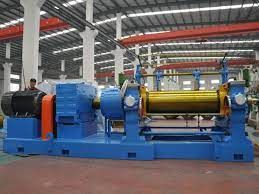
The Complete Operation of a Rubber Mixing Mill
As the name indicates, a rubber mixer mill is used for the blending of rubber compounds to manufacture different products. Generally, a base material of rubber is blended with a number of additives in a rubber mixer mill. These additives include various softeners, fillers, colorants, as well as processing aids. This highly efficient blend is also known as a rubber mixer, open mixing mill machine, two rolls open mill, etc., and is most popularly used in rubber and plastic production factories. The rubber mixing mill is also the most commonly used rubber sheeting and rubber compound blending. Construction of a Rubber Mixer Mill A rubber mixer mill can be recognized from its two rolls that are arranged in parallel, which is why this blend is also known as the two roll rubber mill. These two rolls are, though completely segregated, still move towards one another. These rolls are robust and wearable, and they are fabricated of cast iron. The speed of these two critical can be regulated at a certain ratio as well to blend or spread the material. We also adjust the roll nip to determine the width of the rubber layer. This is also reliant upon rubber state being employed. Like other production operations, heat is generated in this mixture as well, so the rollers of the rubber mixing mill can be chilled with water cooling to attain an accurate processing temperature. Besides the major components, the two rolls, the mixing mill is also equipped with the following components. 1. This mill also has a protection device that averts any damage coming in the way of the major components of the machine due to overloading. 2. Besides the protection devices, there is also an emergency device. In case of an accident, a pull rod can be drawn out from it, and the operation will stop instantly. This makes the rubber mixing mill the safest and the most reliable option. 3. There is also a transmission system in the rubber kneader machine that has a compact structure and high transmission efficiency. This system has a longer service life and assures lower noise pollution. 4. The machine also has a framework that makes its installation much convenient. Operation of a Mixing Rubber Mill The overall function of the mixing mill can be comprehended from the following steps that can also be executed in the calendering machine. Grinding Operation To initiate the rubber mixing operation, start with the opening of the roll nip to 2 mm. Next, you need to regulate the temperature at 70 ± 5 degrees C. Here comes the crucial step where the rubber is added into the mill nip and is lined onto the front roll as a continuous sheet. Now make two cuts with the help of a hand knife from each side and let the rubber move through the nip relatively a few times. After a while, you would notice that at this point, a leveled rolling bank is formed on the nip. Here you would observe that the rubber is well ground and would eventually become softer with a condensed viscosity. Time for the Addition of Ingredients Addition of Activators At this step, you would open the nip to 2.5 mm. First, you will add some activators to the rolling bank. In case you are working on synthetic rubber, then add some anti-degradants to the rolling bank. Here on both sides, you would make two slits. Make a slit through the rubber at one side of the roll, eradicate it, and keep it in the nip at the other side. Make sure that a homogeneous end-to-end mixture is made. Addition of Fillers Enlarge the nip size from 2.5mm to 3 mm. Here you would add the fillers to the blend. If you have these fillers present in a huge amount, then it is better to divide them into 2 or 3 equal parts. After you have divided these fillers, you can add them sequentially to the blend. Addition of Processing Aids and Plasticizers For a great amount of filler formulation, you need to add on processing aids/plasticizers, which are the oils. Pour them incrementally (as are the fillers), subsequent to when most of the fillers have already been blended in. Afterward every addition of filler portion, again, you need to make three ¾-cuts from all sides and once more make a slit through the rubber at one side of the roll, get rid of it, and keep it in the nip at the other side. Addition of Antioxidants Here it is critical to note that the addition of the antioxidants may impede the oxidative breakdown of rubber. To prevent such an unwanted incident, you must add the antioxidants almost at the end and during the blending of the natural rubber. The wisest thing would be to add this antioxidant just before the accumulation of accelerator and sulfur. This was only advised for the natural rubber. But there is an alternative rule here if you are dealing with an artificial or synthetic rubber. For synthetic rubber, you need to add the antioxidants earlier so that you can avoid cyclization. Addition of Curatives Curatives in this procedure can be the addition of sulfur and accelerator. You need to add sulfur and accelerator almost at the end of this blending procedure. This is done to avoid any untimely cross-linking reaction. The curatives can be added by following the same steps as in previous additions. Here again, you need to make cuts from both sides, and like before, once more, you need to cut through the rubber at one side of the roll, get rid of it, and keep it in the nip at the other side. Sheet Out In the mixing mill, now is the time to sheet out the composite by pressing it manually against the roll and let it roll back into itself. This way, it would become an extensive cylindrical roll. At this point, the size of the nip would be 8 mm, and here you need to maintain the roll temperature at 70 ± 5 degrees C like before. Move the rolled batch endwise via the mill nip almost 6 times. Here is where the homogenization step is completed. The Weighing Step Here comes the point where you have to Weigh the rolled batch to note the actual batch weight and percent of the total weight loss. It is measured by the following formula. % wt loss = {(theoretical batch wt – actual batch wt) /theoretical batch wt} x 100 Following the above-described formula, check the sheet with a minimum thickness of 6mm by making the same slits on each side. All done? Let it be matured for at least a day. After the completion of 24 hours, you would observe that the compounded sheet is all set for the subsequent process of molding and curing. Speed of the Two Rolls Another most important step in this procedure of mixing is the speed of the two rolls. It is important to comprehend the rolls friction ratio as all operation majorly depends upon the performance of these rolls. Here it is very interesting to learn that the speeds of the two rolls are usually different. The back roll is usually faster than the frontward one. This difference in speed between the two rolls of the rubber mixing mill is known as the friction ratio. Because of this ratio, a shearing action at the nip is permitted that scatters the ingredients and forces the compound on one roll, mostly the front roll.
Guideline to Buy Best Rubber Mixing Machine
Rubber mixing mills play a very crucial role in the production of rubbers to make them much durable and resistant. The addition of additives in the rubber and the proper blending in the machine make the material much sturdier and reliable. To attain quality results, it becomes imperative to invest in the best rubber mixer machine. This article would help you in learning the things you must consider to buy a high-quality rubber mixing machine. Invest Efficiently If you have decided to invest in a rubber mixing mill, then keep in mind that it must be a one-time investment, so you have to act smart. Choose the rubber mixing machines that can work on different types of rubber. Working efficiently would help your business in diversifying your products in the future while utilizing the same machinery. Capacity The rubber mixing machine you buy must have enough capacity to handle a bulk of items at a time. This would be quite beneficial for you to complete the deadline on time. There are these machines available in the market with different capacities. Hence, choose that capacity that suits your requirements. Efficiency Try investing in the latest machines that consume less power and work much efficiently. These machines should be energy-efficient and render maximum operational safety as well. Machine Specifications You also need to consider the temperature range for operating the machine as well as temperature control features. The quality of the mixing blades, cutters, and rollers must always be considered so that less maintenance is required in the future. Cost-Effective If you want a cost-effective option, then invest wisely in the machine. Spending on an expensive rubber mixing machine can prove to be a much economical option for you. This is because such machines save labor costs and labor intensity. Also, they require the least maintenance. Choose the Right Dealer As you are investing in something on which your business will depend, it becomes crucial for you to choose the right manufacturer or dealer—someone who has all the knowledge and experience of this equipment and field. Only a well-skilled and well-experienced supplier can provide you with the best guidance. Last but not least Before buying a rubber mixing mill you should know more about the product you are investing in and if you are further interested in buying a rubber mixing mill read our article about understanding the rubber mixing mill to make an aware- decision.
How Rubber Mixing Mill Works and Why Do We Buy It?
Mixing mills are used to manufacture rubber compounds. A rubber base material is mixed with several essential additives, for instance, fillers, colorants, processing aids, and softeners. A mill has different rolls works purposely, like two of the rolls of the rolling mill rotates in the opposite direction for mixing purpose and the other one is used for friction. Therefore, the shearing force act on rubber in the nip between the rolls, and this way, the rubber is mixed. Structure of a mixing mill If we talk about structure, a mixing mill consists of two rolls arranged in parallel. Two of the rolls can work independently of one another to be a move towards each other. The best part is you can adjust the speed according to your specifications and requirements. The front roll facing the machine operator or the rear roll rotates faster; it all depends on the mixture of how it starts working itself. Since the heat is generated during the mixing process, as we all know, the rollers can be cooled using water cooling to get back to their optimal processing temperature. The function of a mixing mill Not just two or three, many functions are encountered under this heading. In the beginning, the untreated rubber block is inserted in a roll nip, and the block is pulled in wraps around the front roll in the thick nip. Afterward, additives, such as softeners and shaping aids, are mixed one by one. In order to make sure if substances are adequately mixed with the rubber that has been done after an uneven distribution, the rubber is separated transversely to wound and roll-up. Types of Mixing Mills • Breaking Mill • Rubber Mixer Mill • Laboratory rolling mill • PVC rolling mill • Silicone mixer mill • Refining mill Precautionary Measures The nip between the rollers of mixing mills and laboratory mixing mills are quite sharp and represents the safety hazards. To protect the company’s employees, a manager should check its working, retrofit the old mixing mills, and keep first aid on priority.