

Why Choose Us


The mixing process is a critical stage in the rubber recycling industry, as it directly effect the quality, performance, and reusability of recycled rubber materials. This recycling process ensures uniform dispersion of fillers, reclaim agents, plasticizers, and curing additives within the recycled rubber matrix.
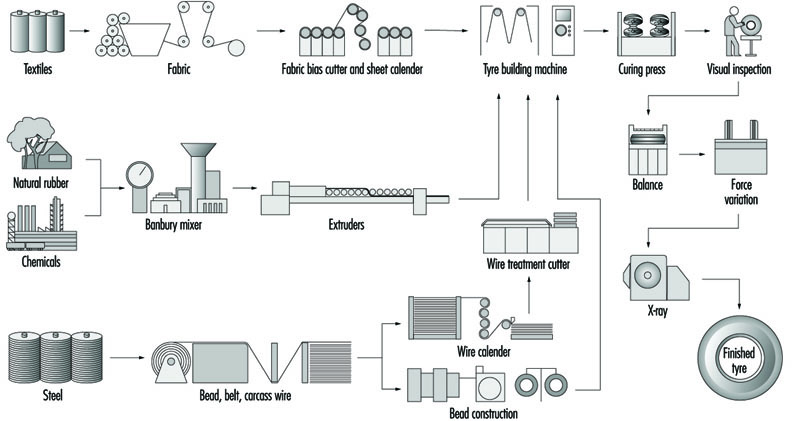
While tire production includes fabric cord calendering, fabric material cutting, steel belt calendering, steel belt cutting, inner liner calendaring and tread and sidewall extruding. And tire building includes tire curing, visual inspections, x-ray inspections, balance inspections and force and movement inspections.
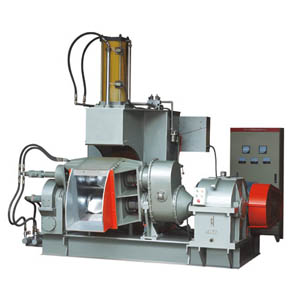
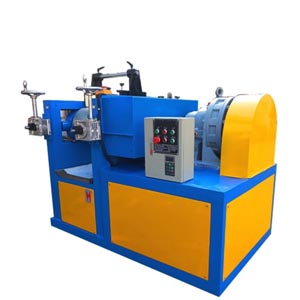
Among these process technologies, rubber mixing mills ,aso known as two-roll mills and dispersion kneaders named as internal mixers, are the most widely used machines in the rubber recycling industry.
Compounding and Banbury Mixing
Compounding is the operation of bringing together all the ingredients required to mix a batch of rubber compound.
A Banbury mixer combines rubber stock, carbon black and other chemical ingredients to create a compound rubber material which are great effect by Time, heat and raw materials on the process of production.
The Belt & Ply
A process called “calendaring”, which involves the Belt and Ply comes next! The calender operation continues to shape rubber.
Calendaring machine is one heavy-duty machine ,which come with 1 or 2 ,3,4 rollers , through which the rubber sheets are forced .The roller calendar machine presses the fabric or steel cords onto and into the rubber during a number of steps, firstly combining the rubber compound and cords (at controlled tensions) to create a continuous sheet of rubber and cord composite. Once in sheet form, the rubber sheets are passed through more rollers to optimize bonding of the different elements and later cut into different sizes, shapes and angles depending on the required contour of the tyre being created.
Milling
After the compound material come from banbury mixer ,it need to go to the next step ,that is mixing mill .
Once the rubber is cooled, it’s sent to a special two roll mill where the rubber is cut into strips that will form the basic structure of your tyre. At the milling stage, other elements of the tyre are prepared, some of which are then coated in another type of rubber.
Two roll mill is widely used in rubber, plastics industries. Such as polyolefin, PVC, film, coil, profile production and polymer blending, pigments, masterbatch, stabilizers, stabilizers and so on. The main purpose is to test raw materials’s physical properties change and contrast after mixing. Such as color dispersion, light transmission, substance table.
In the mixing stage of tire manufacturing, the raw materials are mixed together and heated at a temperature of approximately 120 degrees Celsius.
Curing and Vulcanizing
Once the build process has been completed, the tyre then goes into Curing. Tyres are cured in batches using chemical processes at high temperatures and pressures. The uncured tyre is placed into a mould at a certain temperature and the tyre compound then flows into the mould, creating the tyre details and sidewall design. After vulcanization by vulcanizer press machine, the vulcanised rubber perform more strength, resilient and elastic .
After the rubber become wasted , all rubber is actually recyclable
Modern tire technology integrate chemistry, physics and engineering ,which thus provide people a high degree of comfort, performance, efficiency, reliability and safety.
There is a complete industry dedicated to the rubber recycling process. In the typical rubber recycling process, rubber is collected, shredded, sorted, and finally devulcanized to transform waste rubber into raw material.
The mixing process is a critical stage in the rubber recycling industry, as it directly effect the quality, performance, and reusability of recycled rubber materials. This recycling process ensures uniform dispersion of fillers, reclaim agents, plasticizers, and curing additives within the recycled rubber matrix.
Advantages of Rubber Mixing Mills in Rubber Recycling
Rubber mixing mills machine , that is known as two-roll open mixing mills, they have been widely used in rubber processing for many years.
So why these mixing mill are so common?
Strong Shear and Plasticizing Ability
The counter-rotating two rolls generate high shear forces, which is used to break down reclaimed rubber. This is especially effective for processing reclaimed rubber sheets, crumb rubber, and blends of recycled and virgin rubber.
Excellent Visual Control and Process Flexibility
Open mixing mills allow users to monitor the material during mixing process. This is crucial in recycling, as the material quality from batch to batch can vary . Operators can easily adjust roll gap, temperature, and mixing time . in order to achieve the desired compound quality finally.
So what benefit that mixing mill bring?
* Rubber mixing mills are commonly used for:
* Refining reclaimed rubber
* Blending recycled rubber with virgin rubber
* Final sheet-out and homogenization