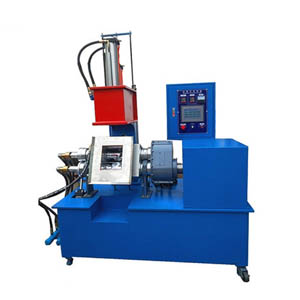
Blending/mixing process is an important process in drug production, it is one of these blending process in pharmaceuticals industries.
Thus it require the process equipment used in the pharmaceutical industry follow strict requirement for accuracy, consistency and cleanliness.
From tablets to syrups, every kind of product must satisfy strict regulatory standards and deliver consistent performance. Whether you are working on tablets, capsules, syrups, or creams, or every kind of product must satisfy strict regulatory standards and deliver consistent performance. Selecting the suitable mixing technology—such as sigma kneaders, double-arm kneaders , high-shear mixers, and planetary mixers or other mixing equipment— they can enhance efficiency, cut costs, and accelerate your time-to-market.
One critical factor in pharmaceutical manufacturing is mixing,which is the process of integrating two or more ingredients . so that achieve a homogeneous and stable formulation.
To achieve consistent quality, safety, and efficacy, some specialized mixing equipment are very essential , such as stainless steel sigma kneaders, planetary mixers, high-shear mixers, and ribbon blenders etc.
Without proper mixing, dosage accuracy and product performance would be effect.
So with quality mixing equipment ,what benefit can it bring ?
1. Consistent & Quality Control
Mixing in pharmaceutical production is crucial because consistent quality and uniformity are the most important for medicines .
The pharmaceuticals often contain several kinds of active pharmaceutical ingredients (APIs) and excipients,which must be evenly distributed , ensures every batch meets pharmaceutical-grade standards.:
* Accurate Dosage – Prevents underdosing or overdosing, ensures patients receive the correct amount of medication.
* Homogeneous Formulation – Prevents ingredient separation and ensures consistent product quality.
* Improved Product Stability – Prevents ingredient separation and decrease the risks of drug degradation
* Enhanced Bioavailability – Optimises drug absorption in the body.
For example, when manufacturing controlled-release tablets, proper mixing ensures APIs distributed and homogenized evenly and fully , which is great to maintain predictable absorption rates in the body. While poor mixing can lead to defective drugs, regulatory non-compliance, and safety risks.
2. Increases Efficiency
Modern pharmaceutical manufacturing by using these advanced , high-speed and high-precision mixing equipment reduces processing time and boosts production output. It also ensure several advantage , such as faster mixing times , integrated automation operation and higher yielding capacity.
3. Scalability
Allows easy transition from lab-scale R&D to mass production.
4. Regulatory Compliance
Meets GMP (Good Manufacturing Practices) and FDA requirements for uniformity.
5. Cost Reduction
Minimizes material waste,especially for rate or expensive material , as it is automatic , it can reduce production downtime.
3. Types of Mixing Equipment Used in Pharmaceuticals
3.1: Sigma Kneaders
Sigma Kneaders are ideal for the pharmaceutical industry because they efficiently mix and knead highly viscous, sticky, and dough-like materials such as ointments, gels, creams, adhesives and drug compounds.
Due to its sigma blades rotate in opposite directions, which create an intensive action for kneading, shearing, and stretching force, it breaks down particles and ensures a uniform and homogeneous mixture.
in a double-U-shaped trough.
* Best for: High-viscosity products like ointments, gels, and adhesives.
* Advantage: Produces uniform, bubble-free, and stable formulations.
3.2: High-Shear Mixers
The reason that high shear mixers are mainly used for mixing, granulating, humidifying, homogenizing, and serving pharmaceutical materials .
In addition , mixing ingredients with excipients is very common in pharmaceutical industry , as they ensure quality, optimal drug performance, and efficient pharmaceutical production.
High shear mixers help ensure the distribution of APIs within the matrix, improving content uniformity and drug effectiveness
* Best for: Dry and wet powders, Powder-liquid mixing and emulsions.
* Advantage: Ensures fast and uniform mixing.
3.3: Planetary Mixers
Planetary mixers feature with a central agitator rotating movements
,which create a homogenous mix for the pharmaceutical compound material.
A Planetary mixer is specally used for dissolving, mixing and kneading high-viscosity and high-density materials products such as ointments, creams, and gels, ensuring even and consistent blending mixture.
* Best for: Creams, lotions, gels , ointments and thick pastes.
* Advantage: Handles high-density compounds effectively.
3.3: Ribbon Blenders
Ribbon blender is one kind of powder blenders ,it consist of 2 parts mounted on a central shaft. Its rotating action of ribbons provides efficient and economical blending.
They ribbon blender adopt a helical ribbon agitator in the inner and outer , mixing ingredients quickly and effectively . The ribbon blender is ideal for mixing most solids and light pastes.
* Best for: Granules, pellets, dry powders, and other solid forms
* Advantage: Ideal for pre-mixing APIs and excipients.
This blending/mixing process in pharmaceutical industry usually involves loading the materials to be blended into the blender or mixer, and then waiting for minutes to complete the blending process.
In conclusion , In the pharmaceutical industry, where precision, safety, and compliance are the most crucial factor, thus advanced mixing solutions are very essential at every stage of drug manufacturing.