





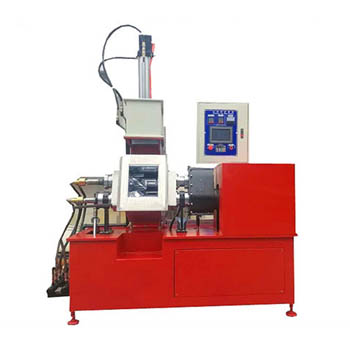
If you have ever tried to uniformly mix ultra High-Viscosity materials, such as EPDM, heavy clay, thick rubber, or dense doug ,one standard mixer machine is unable to fulfill this work and blend homogeneously ,so that ensure its consistency .
For many industries dealing with ultra-high-viscosity materials, achieving a homogeneous blend and mixture is one of the toughest engineering challenges.
EPDM is not a simple material, it behaves like a tough, elastic mass that resists mixing it is sensitive to temperature and demands high torque, strong shear, and precise temperature control. EPDM material is High viscosity & elasticity and notoriously tough to mix.
It is fact that not all laboratory kneaders are capable of processing EPDM effectively.
Even with a high-quality kneader mixer , improper handling of EPDM can lead to poor dispersion, scorching, or inconsistent results.
The key is not just choosing a ordinary kneader, but choosing the right kneader with sigmal blender is very important.
To process EPDM rubber in a laboratory kneader mixer, it is not only about kneader machine capability,but it is equally about how you manage the material itself.
In this blog, Let us explore laboratory kneader mixer for EPDM mixing.
What is EPDM Rubber?
Ethylene-propylene diene monomer (EPDM) is the short of Ethylene Propylene Diene Monomer ,it is one of the most common and widely used man-made synthetic rubber materials.
EPDM is a high-performance synthetic rubber,it is one of the most demanding materials in laboratory mixing industries , but it is also one of the most challenging materials to process. Therefore , a properly designed laboratory kneader is unable to process this material.
Key characteristics of EPDM:
1. Very high viscosity
2. Elastic and rubbery structure
3. Strong resistance to deformation
4. High filler loading (carbon black, oils, additives)
5. Temperature-sensitive during mixing
👉 Can a laboratory kneader truly handle such a tough, elastic, and high-viscosity material?
Yes— But laboratory kneaders is also known as internal mixers , dispersion kneaders or Banbury mixers , it can handle high-viscosity EPDM, but only when this kneader machine is specially designed with sigma (Z-blade) features under the right conditions. This mix process must be perfectly finished.
The laboratory kneader mixer machine with sigmal blender must be specifically designed to handle high torque loads, strong shear forces, and strict temperature control.
The dispersion Kneaders for EPDM featuring specialized rotors or blades ,they are built with robust designs, which are designe for shearing and blending of dense rubber compounds.
A sigma kneader machine is essential because it offer several; advantage as folllows:
* High torque for tough materials
* Strong shear for proper dispersion
* Advanced mixing action (folding + stretching)
* Precise temperature control
* Reliable and repeatable results
How to Judge a Kneader Mixer Machine Can Handle High-Viscosity Rubber?
EPDM is a highly viscous elastomer, so the kneader with sigma must be designed for EPDM materials, delivering strong shearing and kneading action.
It must have feaure as follows:
1. Sigma (Z-type) blade design
2. Dual counter-rotating blades
3. Heavy-duty gearbox
4. Feaure with Jacketed system
On the contrary , If the kneader machine is designed only for liquids or low-viscosity pastes , it is NOT suitable for EPDM materials.
What is a Kneader Machine with Sigma (Z-shaped) blades?
A laboratory kneader with sigma blades (Z-shaped) is a specialized mixing machine designed for high-viscosity, elastic, and sticky materials, this machine is a heavy-duty mixing machine .Its heavy-duty Sigma blades is mainly used for shearing, tearing, folding, and stretching.
Different from ordinary kneader mixers that just push liquids around in a vortex, a kneader with Sigma push tough materials against the walls of the mixing trough and against the blades themselves. It is specifically designed to handle High viscosity & elasticity materials ,which is very sticky, dense pastes.
Best Configuration for Lab Kneader for EPDM
✔ Jacketed mixing chamber (must-have)
✔ Electric heating or thermal oil heating
✔ Water cooling system
✔ Temperature control accuracy: ±1–2°C
Key Components of Laboratory Kneader with Sigma Blades:
* Mixing chamber (often jacketed)
* Two counter-rotating sigma (Z-shaped) blades
* Drive system (motor + gearbox)
* Temperature control system (heating & cooling)
In these key component of laboratory kneader with sigma blades ,“sigma blades” are the most important part. Thanks to its splecial feature , the sigma blender help such laboratory Kneader machine feature unique mixing ability, especially for handling high-viscosity, elastic, and sticky materials.
There is a wide range of materials that are used in this mixing process ranging from the low viscosity rubber to High-Viscosity Materials .
The dispersion kneader is supplied and customized by the manufacturers are different for various material.
If you have ever tried to uniformly mix materials with the consistency of heavy clay, thick rubber, or dense dough ,then use Simptek sigma kneader machine .
In conclusion , choosing a suitable high-quality 3 litre laboratory kneader with Sigma rotor is very critical to achieve reliable mixing results.
Whether you are working in rubber, EPDM , polymer , silicone, adhesives, pharmaceuticals, or advanced materials, the right kneader with sigma and jacket system directly impacts your R&D efficiency and product consistency.
Are you currently processing EPDM or other synthetic elastomers in your lab reasearch ? What are your biggest challenges with filler dispersion or temperature control?
We, Simptek are always here for you.